How I prepare for Nature Study
- My process
- Deciding on a Topic
- Narrowing the Topic
- Finding the Resources
- Making the Schedule
- Mother Culture Nature Study
The evolution of my process
When I first started homeschooling and using the Charlotte Mason method, the nature study element was difficult. I’d been using AO pretty much from the beginning, so I knew the topic I was supposed to be studying each term and that we were supposed to get out in nature and notice things about the topic. But since it wasn’t in my weekly schedule based on the AO 36-week schedule, it often got left out. Also, most of the topics for nature study were things that I myself knew very little about – so I couldn’t just have casual conversations about these topics while strolling along on our nature walks.
When I realized that nature study was just not happening, I decided I needed to put it in the weekly schedule. And to put it in the weekly schedule I needed something to actually do. Which meant I had to actually plan ahead for what I hoped to observe. The first term I actually planned out was an insect study where we bought the little ladybug larva and the caterpillar to butterfly kits and even an ant farm. I found some books, mostly board books, for the object lessons. I didn’t have a detailed plan, so though it was in the schedule and we had some insects to observe and draw in our nature journals, nature study didn’t happen every week.
The next term we did garden flowers – which was convenient and easy. I put a different flower from our yard or one I could buy at Lowe’s in the schedule every week and we found its parts, counted its petals, looked at the shape of its leaves and then drew it in our nature journals.
But then the next topic was invertebrates. That took more planning. With more planning, I decided to actually write out a 12-week plan. That first attempt is posted on my nature study page and you will see it was very rudimentary. But it worked so well, I realized that is what I needed to do for all nature study topics.
I’ve done this for three years, working on the fourth. I have become more and more aware that, as the AO website says, nature study is “observing the natural world around us. It is not a one time event; rather, it is a habit of being outdoors on a regular, consistent basis over weeks, months, and years. It is a process of getting to know the natural world around us through first-hand, personal experience.” By having the schedule in place, nature study has become a habit. While we focus on one topic each term, on our nature walks, family vacations, trips to see the cousins, or walks around the neighborhood, we are now noticing the nature around us – even those topics from previous terms. Being disciplined to follow a schedule of object lessons and planned observations has created the habit in us of noticing what is around us. And being able to name what we’re observing helps in the process – and that could only be happening by me teaching myself so that when my sons notice something, I can give them the name for it.
Deciding on the Topic
I usually prefer to follow along with the AO schedule – I like how every year there is a mix of animals, plants, and non-living nature (such as rocks or stars). However, some of the topics would turn nature study into science lessons because there is not a way for us to do much actual observing. For example, I live in a suburb in the desert. There are rarely amphibians to observe – tadpoles in a few select locations for a couple of weeks in spring. Mammals are also hard – we have a dog and squirrels sometimes run through the yard and maybe we’ll see a jackrabbit on a walk. But we cannot observe them regularly.
For the topics in the AO rotation for which I know we will not be able to do regular observations, I choose a different topic. I either use one of the topics scheduled for a different term or take a topic based on one of the others. For example, we did an entire term on non-flowering plants because when we did wildflowers we did not include flowerless plants as suggested in the AO rotation. We live in the desert, so I am considering doing a term on succulents, cacti and/or palm trees in the future.
The most important thing about deciding on the topic is knowing how we will be able to make observations so that it does not turn in to a science lesson.
Narrowing the Topic
Once I have decided on a topic, I then have to figure out what exactly we’ll be studying about that topic and how we will be observing it. I look at several things to narrow down what we’ll do in 12 weeks:
A cursory knowledge
The first thing I always do once I’ve decided on a topic is to do a little basic research for myself. This includes HONS (see next item) as well as wikipedia and google and looking at field guides. I want to get a basic overview of what there is to learn about a topic and how I should start thinking about dividing up the study: Do I want to study different animals/plants or group them somehow? Do I want to study the parts of the animals or plants? Do I want to study them based on taxonomic divisions or other category like location? How do others think about the topic?
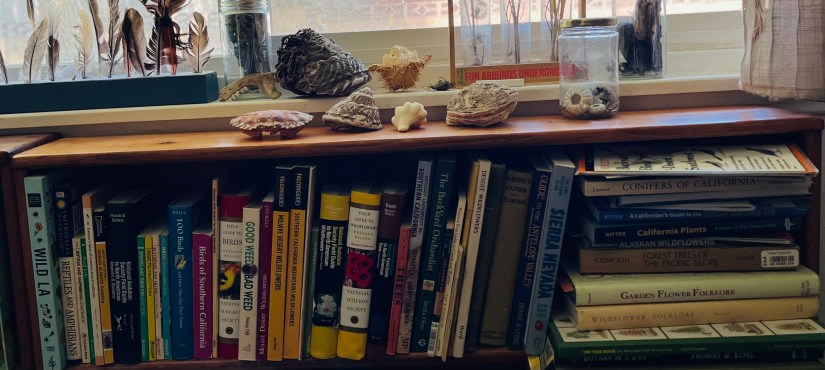
Field Guides are one of the most helpful resources for getting my head around the general topic and making sure I’m starting off in the right direction. I am slightly embarrassed to admit it was from a field guide I realized that we would not be studying frogs or toads in our reptile study! Note: we did reptiles before I started writing my schedule down so there is not currently a schedule for reptiles posted.
The Handbook of Nature Study (HONS)
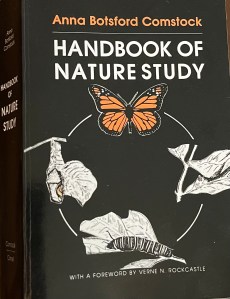
Most of the topics in the AO rotation or that I choose otherwise are covered at least a little in HONS. I read through the topics Ms. Comstock included, what kinds of observations and questions she prepared, and pick out ones that will work for us. For example, as I’m writing this I am preparing the Cultivated Crops study. There are crops in HONS that will work well for us – strawberries and clover and pumpkins that we can grow. But I’m not sure if corn or cotton are realistic. So I will fill in additional crops that I know we can grow like tomatoes and peas but will base the study and observation on what Ms. Comstock did for the other crops.
AO Nature Study Exam Questions
Reviewing the exam questions for the topic helps me to focus our study a little. For example, with birds I focused on feathers, beaks and feet since I saw questions about what they had observed about these parts of the birds. For cultivated crops we’ll look at how the plant stores its food and for trees we observed how they changed over the seasons.
What is realistic to observe for us
Once I’ve decided on a topic I have to consider what we can actually observe. With wildflowers that is a huge quantity of options so I had to narrow it down. I decided to go with some common plant families that I knew we had observed in the past. With fish, I knew that we were limited to the pet store and perhaps a visit to a hatchery and then maybe getting a whole fish from the grocery store. But even with that we can observe the parts of the fish, so that’s what I focused on.
I do a search for local activities or places where we can observe the topic – zoos, science museums, observatories, gardens, etc. For the term on the Night Sky, I discovered our city has a monthly moon walk through one of the nature preserves and found a company that hosted a “star camp” in the desert with tents, mattresses, and telescopes provided (Death Valley Starcamp). For the term on trees, I looked at the websites for local gardens to see which trees they have. Finding these resources helps narrow down what is possible to observe.
What are our interests?
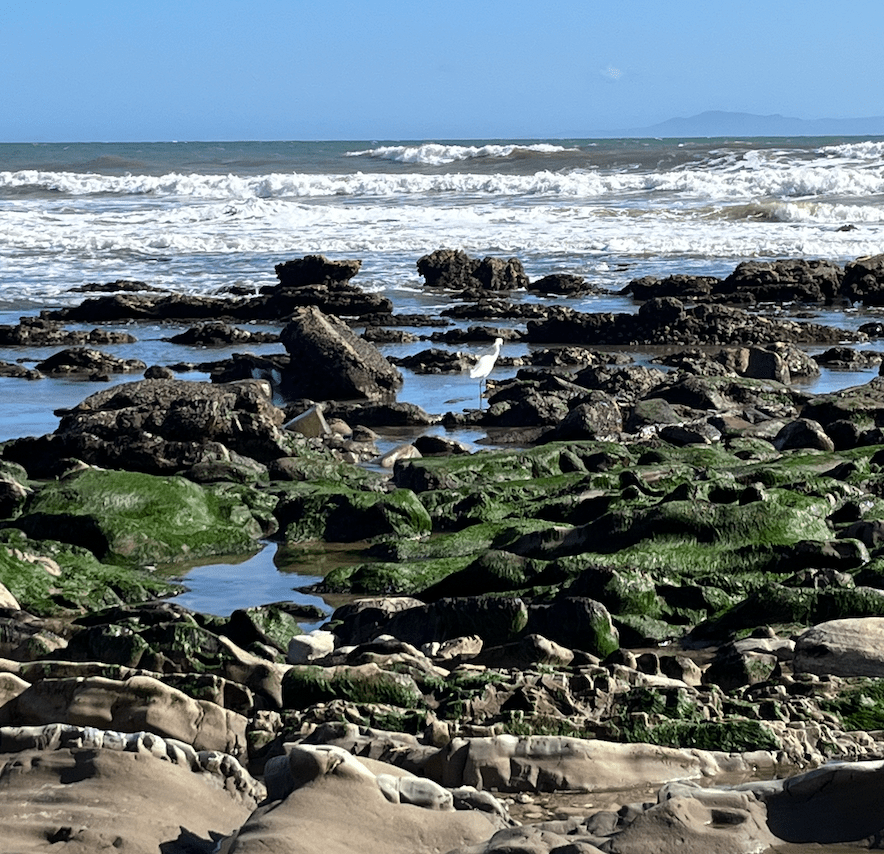
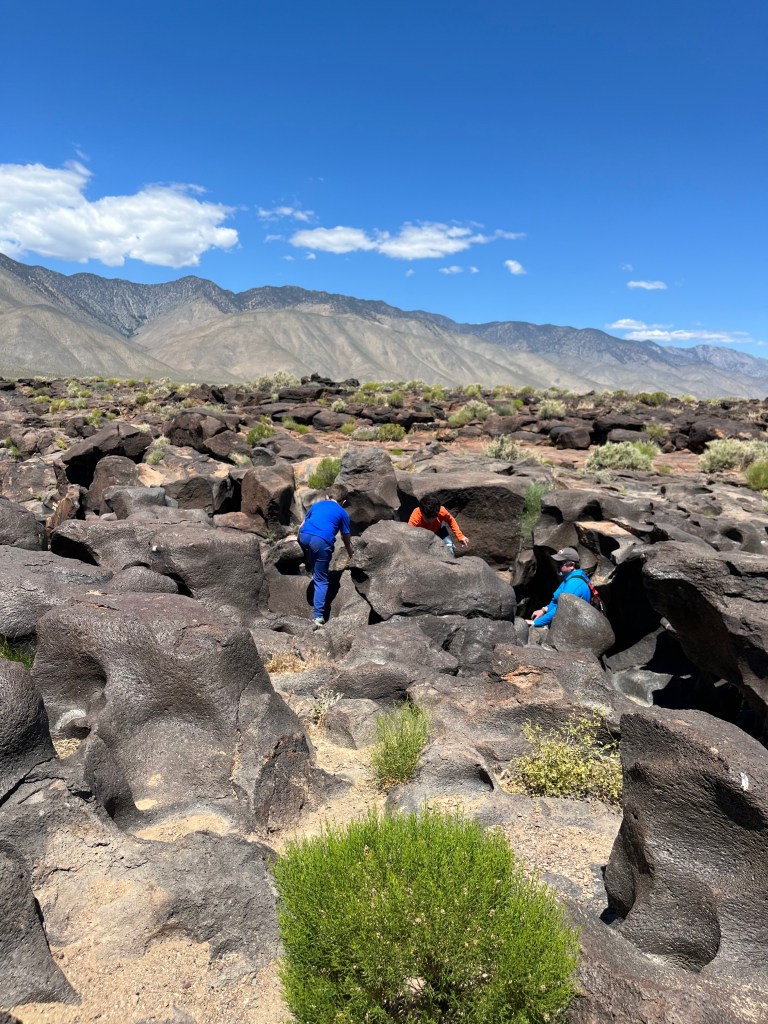
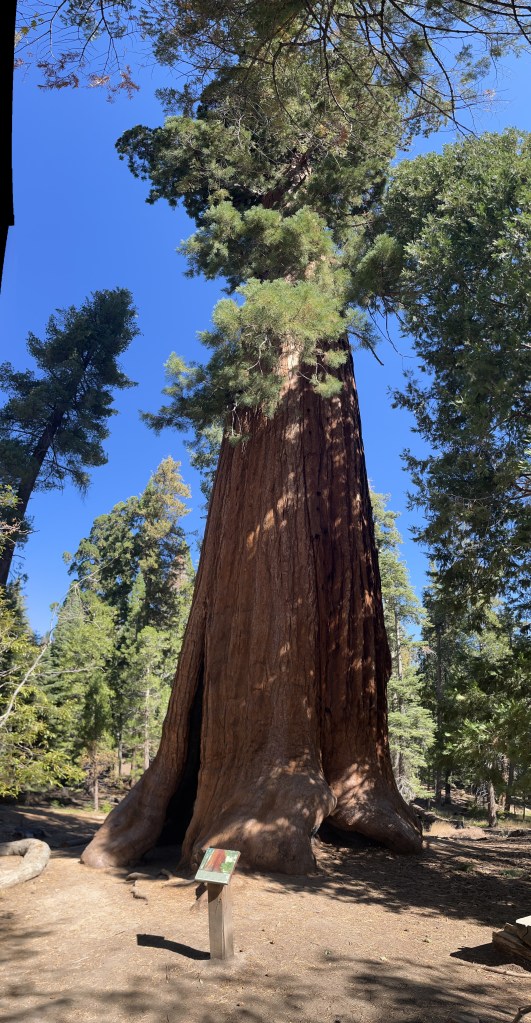
After I’ve considered what is possible, I can also narrow down the topic to what we are really interested in studying. For example, when we studied trees, we all wanted to go visit the Giant Sequoias that are only several hours from our home, so I included a week for studying them. And when we studied rocks, my sons really wanted to learn more about volcanoes and fossils, so we added that in and left out soil. When we studied invertebrates, we focused on sea creatures because we love tide pools.
Finding the Resources
Once I know what we’ll be studying, I start looking at what resources are available. The following are where I search for books on the topics. This helps me know what it is possible to learn about – for me as well as something age appropriate to read during the object lesson portion.
- Biblioguides – I have a membership here and it is where I go first. I can search their list by specific topics and locations. The results show me where I can find the book – which is especially helpful when there are online free resources. There is a search feature for non-members that could also be helpful, but less information is available.
- Sabbath Mood Homeschooling has a page dedicated to Living Science Books and one dedicated to Nature Lore Books.
- Reshelving Alexandria – This searchable site allows you to use the filter function. For example, you can search book descriptions for “trees” and filters the results to bring back only books available for free.
- Open Library (Archive.org) – This database will also allow you to search and filter the results. And if the book is available in archive.org, it will direct you to the site.
- My local library – I will search their database for books in the juvenile section on the topic. This sometimes brings back nothing and sometimes I find many books I wouldn’t have otherwise known about. Because it is so hit or miss, I usually do this one near the end of my searching.
- Amazon – Another search that is hit or miss. If I find a book here I can search for it specifically at open library or my local library.
- Google – When I get desperate, I will just search “books on trees for kids” or something like that. And once in a while I’ll find something useful.
After I’ve found and read through the books, I can then start narrowing down what I want to talk about or what I want my boys to observe about each topic. Once I have an idea, I’ll start searching YouTube for the topic to see if there are any short videos on the specific topic that add something that the books didn’t cover.
I have a folder in my documents where I put all the books and videos and ideas I’m finding. At this stage it might not be very organized because I’m just putting in everything I find that might be useful.
Making the Schedule
I use the same basic schedule template every term – just updating when needed. I have it divided into 12 weeks, so the first thing I do is take a look at all the “stuff” I’ve been squirreling away on the topic to see how to split it into 12 weeks. Sometimes there are enough topics that I have to pick out only 12. Sometimes I can “squeeze” in extra topics that are close so that in one week we do two topics – like in weather we are looking at tornadoes and hurricanes in one week. Sometimes there is so much on one topic that we will take more than one week to cover the topic – like clouds in the weather study where we first study how they are created, then their names, and how to measure how much of the sky they cover.
Often there are topics that just won’t fit in. When there is more than 12 weeks of material, sometimes I leave an entire topic out – like in the Rocks & Minerals study we did not study Soil. But we’ll get to study that either the next time Rock & Minerals is on the schedule or maybe we’ll do one entire term on that. I also think about my boys’ age when deciding what topics to cover – the AO Exam Questions helps with this. The further along they are in their studies, the more detailed their observations should be.
Once I have the 12 weeks divided into topics, I start organizing all the resources I’ve found and figuring out which one or two I want to use each week. You’ll notice that I can never quite get these resources down to what will fit in a 10-minute object lesson, so I almost always have an “additional resources” section for the week for the lower priority options. Just in case we have time for more. We hardly ever do, but it makes me feel better to have them there ;).
Mother Culture Nature Study
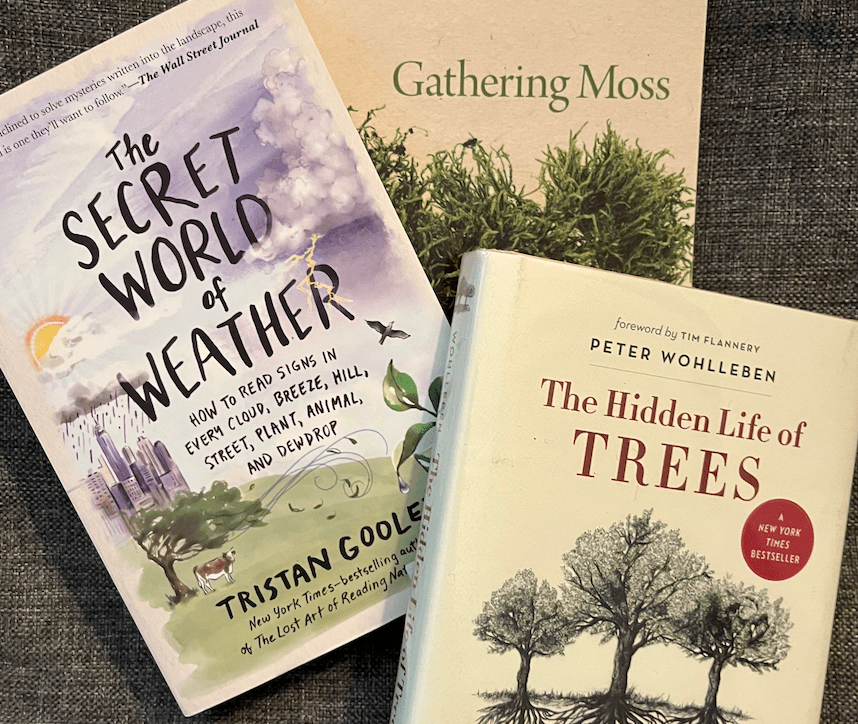
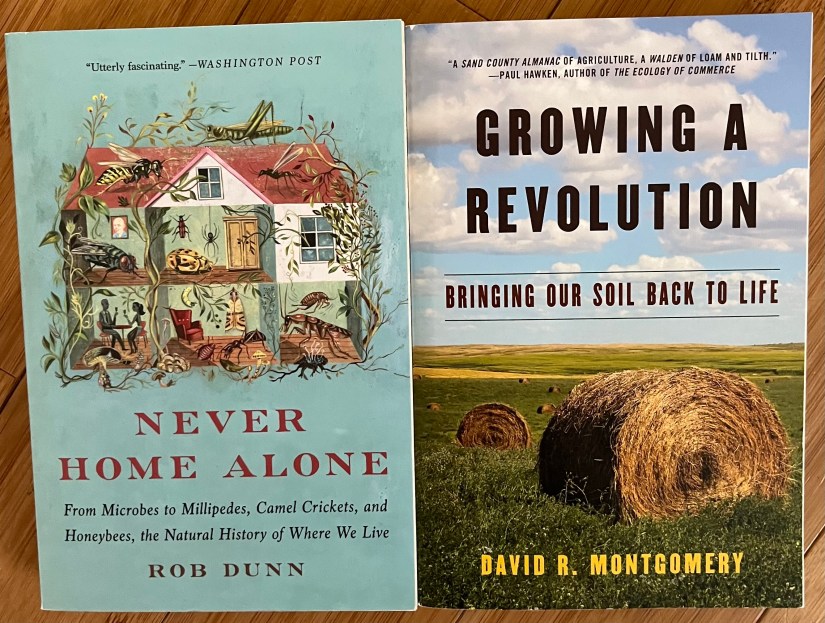
Every year in my personal reading I try to incorporate books about the nature topics we’ll be studying. It is helpful if I can read this before I’m preparing for the terms, but sometimes I just read it during the term or after the term. It give me a more in depth look at the specific topic and a deeper understanding that helps me in my conversations with my boys. I usually include these books in my list of additional resources as ideas for you. When the topics come back around when my boys are older, I have plans of having them read the books too, or at least selections from them.
I started sharing the Nature Study plans not because I think you’ll be able to use them exactly as I have created them. In fact, I rarely use them exactly as planned. But I post them as a starting point for you to create your own plan that fits with your family – your own children’s age and interests, your own location, and the resources available to you. I hope that the work I have done to have better nature study time with my boys helps you to enjoy your own nature studies a little more too.
 Ambling Together
Do you have the earlier guides fish rock invertebrate available for downloads?
LikeLike
Yes – all three of those (first, rock, and invertebrate) are on the nature study page here: https://amblingtogether.com/nature-study-guides/#nature-earlier-guides. Hope you find them helpful!
LikeLike
Click on the photos for the documents
LikeLike
This is a HUGE blessing! thank you so much!
LikeLike
I love your site! Thank you so much for all the time you’ve put into creating these resources then sharing them with others. Question about the nature lore books listed in the nature study guides: do you read those in addition to the natural history/science books your boys are reading in their respective AO years?
LikeLike
Thanks! I figure since I am spending the time creating them for myself, I might as well share in case it’s helpful to anyone else :). Regarding the nature lore books, I usually have one scheduled during our together time in the morning – for about 10 min once per week. But not necessarily all year long.
LikeLike
Thank you so much. I feel like this is what I have been missing. After 20 years CM, I still struggle with nature study. We go out into the bush often and I sometimes do an object lesson, even done special studies, but I think your suggestion is actually what I need to be cover variety rather than the same few things or nothing.
LikeLike
So glad to hear it helps. I know if I don’t write down a plan, nature study will rarely happen! If we do an object lesson and learn what to look for, our nature walks etc turn into nature study!
LikeLike
Hi, this is so helpful! When looking at the Invertebrates schedule, I see “Jr. Science” listed as a book to read. Is this the same as Junior Scientist series? Thank you
LikeLike
I used “Jr. Science” as a shortened version I mentioned in the document above, the Junior Science Book of Seashells by Sam Epstein.
LikeLike