Back to Main Planning and Scheduling Page
2024-25 School Year – Completed (with M) and Reviewed
M will be in Year 6 and Em will be in Year 3. This is my first time through Year 6.
- Weekly Schedule
- Bible
- History
- Language Arts
- Foreign Language (Latin)
- Geography
- Citizenship (Plutarch)
- Nature Study
- Science
- Math
- Artist
- Music
Weekly Schedule
Every week I will make a weekly schedule for M to follow (see Planning and Scheduling for further details). I plan out what he will do independently and what he will do with me and make sure it can all fit into the school time allotted. This is not all of his work since we also spend 45-60 minutes in Together Time first thing in the morning (Together Time template here).

Year in Review
This year with M, I continued to work with him to figure out which types of (Special Ed) accommodations he needs to be able to do his best. Last year I recognized I would need to go more slowly through math and allow “cheat sheets.” This year I realized I would need to approach math completely differently. We have continued to develop how to help him best with narrations. This includes small prompts and allowing drawing in addition to written. I’ve also noticed that if he is coloring or drawing during the reading, he is able to look at a specific part of the drawing and remember what I was reading while he was drawing that part. M does very little school book reading on his own – either I read it to him or he follows along in the book while listening to an audiobook. He reads voraciously in his free time, but I’ve found that if I have him read a school book (even a novel) on his own, he reads it extremely slowly, or gets distracted. Listening to an audio version keeps him focused and able to finish the assignment on time.
Bible
Bible is split up into Together Time and Vespers and then by the time of the year. This year we will cover the following:
Bible In Review:
For Sunday Readings, we only made it through a handful of stories from Parables of Nature, so we’ll continue with sprinkling in those stories throughout the year.
For Bible Memory, we made it through: Philipians 4:4-9, Ephesians 2:2-8, Psalm 129:1-12, Psalm 40:1-2, and Deuteronomy 6:4-9.
Edits made to chart below
| Together Time | Vespers (see Liturgical Year for details) | |
| Aug – NovOrdinary Time | Continue I & II Kings Study from AO 5 Reading (see Other Guides for Kings Study) | I & II Samuel |
| Advent | Hallelujah by Cindy Rollins | Advent Readings |
| Christmas | N/A (no school) | Christmas Readings |
| Jan/Feb | Finish Kings, Start Daniel | |
| Lent | The Sacred Sacrifice by Hannah Paris | Lent Readings |
| Easter | Acts | |
| Jun – Aug Orinary Time | n/a (no school) | Continue with Acts |
Check Out the Other Guides pages for Bible Reading schedules (I’ll post them as I create them).
Sunday Readings during Vespers will be Parables of Nature. See the Liturgical Year page for how we do Vespers.
For Bible Memory, we work through one or two passages a term in Together Time. I will use the suggestions from AO3 & AO6 recitation for the passages I choose.
History
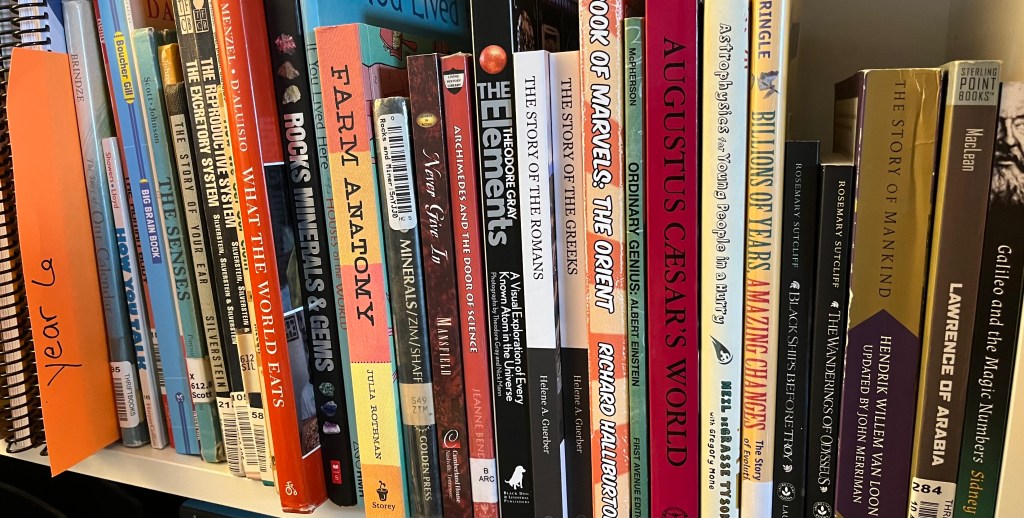
I am not making any substitutions to the history books, though we finished Answering the Cry in Year 5, so that will not be in the Year 6 schedule. The hardest part of scheduling the history is deciding which books I’ll read aloud and which M will read on his own. I have learned from experience that unless the story catches his attention, M will not remember much of history readings, and this is more pronounced when he reads independently. This makes me want to read all the history readings to him, but that is unrealistic and won’t give him any practice.
I’ve decided to read aloud all but The Story of the Greeks and The Story of the Romans. These have short chapters and lots of narrative that I hope will grab M’s imagination. I will pre-read the assigned chapters every week so that they are fresh in my memory. I am also going to schedule these books for all three terms so we can get through the almost 220 chapters in 36 weeks. This will mean he will need to read 6 or 7 chapters every week, so some days will have 2 chapters. I will work out the exact scheduling for this when I do my weekly scheduling and give him more readings on days when there is less work elsewhere. But I have broken it out in the 36-week schedule so I can keep track of about where we should be in order to finish both books.

For the timeline, we will continue to use the Book of Centuries we started in year 4. I fill in my book along with him (though I also add in other entries from my own readings). Some of the entries he draws pictures and some he chooses just to write. And some he wants to do both!
History in Review
As we got into the readings, I realized that it was going to take longer than one term to finish up Story of the World, especially since I had to start several chapters earlier since we did not finish all the readings in Year 5 and I wanted to make sure we covered World War I. I ended up reading SOW most days, splitting some readings into two days. Since this was taking so much time, I decided to drop Story of Mankind. We finished the readings halfway through term 2.
When we finished SOW, there was an empty space in the schedule, so I added in Nelson Mandela: South African Revolutionary by Beatrice Gromley. This also gave us a little of the geography of South Africa that we missed by not doing the Livingstone book. It took us the rest of the year, me reading several pages aloud on most days. I had not pre-read this, but it turned out to be a good read, perfect for M’s listening level and I think it will be a good one for Em to read on his own when he gets here.
We started reading Augustus Caesar’s World in Term 2 with me reading a chapter almost every day. Some of the longer ones we had to split into two days. By the end of term 3, we had almost finished the book, but not quite.
M started out reading The Story of the Greeks on his own, but wasn’t keeping up. So I had him follow along to the Librivox readings. He can only handle reading and narrating one story a day, even if they are short, so it took him into Term 3 to finish Greeks. He only made it a little way into Story of the Romans. His written narrations were often just a short sentence or two, but then he’d make a drawing as well and when he explained the drawing, I’d get an additional oral narration.
History Biography
As I’ve mentioned before, we are not currently reading Trial and Triumph. We will be adding this in to our family Sunday readings or Together Time when both boys are a little older.
We will not be reading the Genesis book. I will substitute with other Origin books in science (see below) and we will be reading John Walton’s book on Genesis in later years for Bible/Theology.
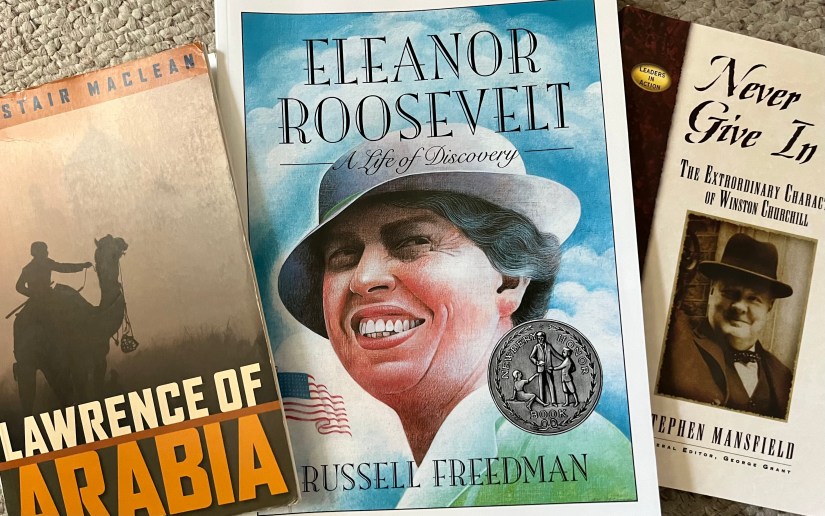
For the Winston Churchill biography, I have decided to cut the readings and fit the book into just Term 1. I found the last half of the book the exact opposite of what Miss Mason describes as the type of book our children should be reading, namly that it “…does not label the actions of [its] people as good or bad but leaves the conscience and judgement of [the] readers to make that classification.” (Vol 6 p 186-7). My schedule along with references, maps, and chapter summaries is posted on the Other Guides page.
Since Churchill will be in Term 1, and we’re not doing the other two books listed, I will be assigning Eleanor Roosevelt: A Life of Discovery by Russell Freedman in Term 2 and Lawrence of Arabia by Alistair Maclean in Term 3. I’ve written up a schedule and reading guide for each of these and posted them in Other Guides.
I’m planning on having M read all the biographies independently, though for Lawerence I’ll make sure to go over maps with him while I review his written/typed narrations. I have scheduled in a biography reading slot each day.
History Biography in Review
M read both the Churchill and Eleanor Rosevelt biogrraphies on his own. He used the audiobook narrated by Barbara Caruso for Rosevelt’s biography as he followed along. He seemed to follow the story of both of these, and made connections between them and to his other readings. For each of these, I had him read for 10 minutes every day and he finished both before the term was ended. We used an audiobook narrated by Peter Ganim for Lawrence of Arabia biography, with both us listening together so that I could help M understand and follow along on maps etc. We listened to a chapter a week, splitting the chapter into two days. But M did not like it – he groaned every time we had to read it. I enjoyed the story, so I’m hoping Em will when he gets to it.
Language Arts
Literature
The only changes for these books are the way I’m scheduling them. For The Hobbit and Animal Farm we will be listening to audiobooks (with M following along in the hardcopy version). They are both scheduled for term one. If we listen to 75 min per week of The Hobbit, we’ll be done by week 8 and will have the last four weeks for Animal Farm. We will need to listen to 45 minutes of that per week to finish in Term 1. This will clear us up to read through the two Rosemary Sutcliff books in Term 2 and 3. Age of Fables will be as scheduled.
Literature In Review
The Hobbit was a great hit. We listened to the audiobook narrated by Andy Serkis and included Em in the fun. We listened for about 20 minutes each day and they would beg to keep going. We finished it a bit earlier than planned because some afternoons they’d ask to listen and I didn’t have the heart to deny them! M chose it as one of his favorites of the year.
For Animal Farm M and I listened to the audiobook narrated by Ralph Cosham. I had not read it before, so I listened while M followed along in the book. We read about 10-15 minutes most days and finished by the end of the term. M looked forward to these readings and was able to understand more of the point than I thought he would. Everytime the commandments would change, he’d flip back and compare them to the original and most of the time would be able to verbalize what the change meant.
In Term 2, since I was reading the Lawrence of Arabia biography with M, he was able to listen along with Sutcliff’s Black Ships Before Troy and The Wonderings of Odysseus. Most days he would listen to more than 10 minutes so he finished both of these before the end of Term 2.
I ended up not reading Age of Fables. The other readings were taking so long, that something had to go.
Poetry
During our morning Together Time we will read through the AO assigned poets, so we’ll be reading both the AO 3 and AO 6 this year. We enjoy reading the poetry together and don’t mind that we’ll go through each poet twice by the time we’re done. We also add a diverse poetry pick on Fridays. Using HeritageMom.com recommendations, I have chosen Gladiola Garden and Poetry for Young People: Maya Angelou for the Friday readings.
Poetry in Review
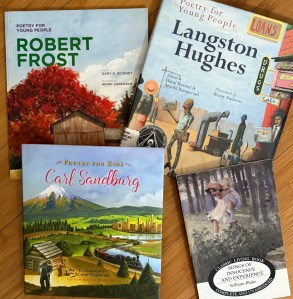
For Term 1, I ended up alternating between Frost and Blake during our Morning Time readings. In term 2 I just read a Sandburg poem three days a week, alternating with the Folk Song the other two days. I did this because our Morning Time was starting to run long and it was one of the things I changed. In Term 3, we read a Hughes poem three days a week. For the Frost, Sandburg, and Hughes poems, I read from the Poetry for Young People series. For Blake I read from Songs of Innocence and Experience. We also did an ocassional Poetry Tea Time where the boys choose any poetry books they want and read a favorite or new poem. Or request I read it. And often guests are invited.
Dictation in Review
Early in the year I realized that M was not doing well with spelling. We had been doing dictation from passages in his reading, but it wasn’t sinking in. So I saw online that The Modern Speller by Kate Van Wagenen was another option – and it was free online! I read through the Teacher’s Manual and decided to use it with Em too and just add it to morning school. So we do one lesson Mon-Thurs together, they study the lessons independently and then on Friday I choose one or more of the lessons to dictate to them. It’s been working well and I’ve noticed an improvement in M’s spelling.
Copywork
M will continue to do his copywork in cursive. This year we will use the book Cursive Handwriting Workbook for Kids: Jokes and Riddles He is schduled to do copywork two times per week – with specific instructions that it cannot be checked off done until he has shown it to me. And when I review it, I make him read the cursive back to me. He still has some trouble reading cursive, so I add in this practice. I also had him start doing some of his written work in cursive last year and will increase the amount required as this year goes on.
Recitation
M can usually work through one or two poems or Shakespeare passages each term. I will give him the option to choose a poem by our poet, but if he doesn’t want to, I will use the AO suggestions here. M has a hard time reading aloud or reciting, so for him I allow him to listen to a recording of the passage as part of his recitation practice time. I find that if he recites without listening, it is monotone with a closed mouth. But if he listens to a recording, he is able to recite with more animation and better pronunciation.
Grammar
Last year we started using Fix It! Grammar, Level 1. I had grammar scheduled for one day with me to learn or review the concept and on the next day for M to do the worksheet on his own. We did four days of latin and one day one day of grammar. This year I am going to press through the lessons 1 per week instead of 1 every 4 weeks. So I have scheduled a grammar lesson with me on the day we do a review of a latin lesson and then independent grammar everyday.
Writing (Written Narration)
Last year M started doing some of his written narrations typed. This year I will have him do one written and one typed each day. These will be from his independend reading and the narrations from the readings I do with him will continue to be oral.
Foreign Language (Latin)
This year M will continue using Getting Started With Latin, but will most likely move on on to Keep Going with Latin. We listen to the You Tube recordings together and review the work he did on his own that day. Then he does the exercises from the lesson on his own. I transcribe these lessons and often we do only 1 or 2 lessons per week. So for the days there is no new lesson, I write a review sheet of previous lessons or vocabulary for him to complete.
Foreign Language in Review
We finished the Getting Started book at the end of Term 2 and were able to get through the first 16 lessons of Keeping Going in Term 3. The concepts are getting more complicated and the book switches to a dialgue format for the translation exercises so M has slowed down on how much he’s able to progress. I imagine we’ll have to spend half a term next year remembering all the case declensions and vocabulary before we can start again.
Geography
We’ll continue working our way through the Halliburton books and following along with the photographs and videos on the Richard Halliburton’s Complete Book of Marvels: The Classic Journey Updated for Today website.
After pre-reading the David Livingstone biography, I’ve decided not to have M read it this year. I would like to include a story of African colonization from an African point of view first. Perhaps we will come back to David Livingstone in later years after studying African colonization in a more african-centric way. I am replacing this with the Lawrence of Arabia book mentioned above under biographies. Since we have done a continent study of Africa using the the resources from heritagemom.com, I don’t feel the need to go over African geography again with M this year.
For the AO geography concepts to be taught, I have written a 36-week schedule that will be a 10-minute(ish) lesson once a week during Together Time. I know AO means these lessons to be more informal, but if I don’t formalize them, they won’t get done. Especially since many of the concepts are not ones that will come up naturally during nature walks or free time. I have posted my schedule in Other Guides.
Each year we choose a continent (or one year, the State of California), to work our way through. We cover the map, physical features, history, original peoples and/or current peoples, and sometimes mythology or folklore for each country on the continent. We’ve spent a year on Africa, a summer on Australia, two years on the U.S.A., and one year on California. I used Heritage Mom’s Amazing Africa!, and I’ve posted my guides for U.S.A. and California on Other Guides. Maybe I’ll get around to writing up what we did for Australia and share that too. This year we are going to look at South America. I am tentatively planning on using South America by Nellie B. Allen as a spine or reference. I’ll post my plans on the Other Guides page when I complete them.
Geography in Review
I did end up creating a 36-week study for South America (See Other Guides). We enjoyed our virtural travels through the continent, though with only 20 minutes a week there was so much more that I had included in the study that we never got to. M has such a hard time with maps that I had to take some extra time with him to force him to try to memorize the names of the countries and their locations, otherwise nothing sticks. In the end he was able to locate most of the countries and major landmarks.
Though we worked through the geography topics for Term 1 and 2, I did not do them for Term 3. It was just one of the things that had to be dropped because we kept running over time.
Citizenship (Plutarch)
Last year was the first year working through actual Plutarch readings. We only made it through two, so I am scheduling only two for this year as well. I’ve chosen Publicola and Marcus Cato and will be using Anne White’s guides for each. I have Plutarch scheduled for 20 minutes once a week and based on last year, we will get through less than one chapter per week. I have not done pre-readings on these before, but my goal is to read the chapter the week before so I have a better idea of how to schedule it and be able to answer questions a little better.
Plutarch in Review
This is one subject that I really want to do, but M is just not ready for. I find comfort in the writings on the AO page “Using AmblesideOnline with a Special Needs Child” and know that it’s ok that we are taking things more slowly. I am still “spreading a feast” and M is being digesting the ideas that he is interested in and capable of processing.
Nature Study
See Nature Study info and rotation here
We do nature study object lesson and/or observations two times per week plus a nature lore book once per week in Together Time. This year we will be covering the following topics:
Term 1: Cultivated Crops
Term 2: Soil/Dirt (I did not cover this in the Rock & Mineral study we did several years ago). AO schedules Weather this term but we covered this last year
Term 3: Insects
All my nature study schedules with object lesson ideas and observation helps are located on the Nature Study page.
Science
This year science includes Anatomy, Chemistry, and Origins. Here is how I have decided to cover these topics:
For Anatomy, I will be using alternative books as I do not like how the AO textbook is so textbooky and muddles theology and science by sometimes teaching Bible passages to support the lesson. The books I have chosen are mostly available on archive.org and the topics align closely with those in the AO schedule. See Other Guides for my AO6 Anatomy curriculum.
We will be using the Chemistry books as assigned. I have written up a reading guide for the Periodic Table book that breaks the readings into multiple parts. I will be reading these to M and if needed, I’ll break the parts into multiple days for the week assigned. I’ve included “words to remember” in the guide to help me with recaps as well as some information on science demonstrations that can be done in conjunction with the reading. It is available on the Other Guides page.
The Book It Couldn’t Just Happen assigned by AO will be replaced by two books. The first will be Astrophysics for Young People in a Hurry by Neil DeGrasse Tyson. We will be listening to the audiobook of this while M follows along. Then we will discuss the concepts together. The second book will be Billions of Years, Amazing Changes: The Story of Evolution by Laurence Pringle. I will read this one aloud to M. I have created a schedule that includes some links I found to help explain some of the concepts.
For Term 3 Together Time, we will do a magnet study using Magnets by Rocco V. Feravolo (also available free in a previous edition from archive.org). I’ve written up a 10-week guide for this that includes the science demonstrations and necessary supplies (see Other Guides page).
Science in Review
The anatomy schedule I put together worked well. Most weeks we would do the assigned reading on one day and the videos the next. On the first day we would look at diagrams and the like and so that when we started on the second day we could reveiw the diagrams and discuss what we had learned before watching the videos. I purposely planned the reproduction system for the last four weeks of the year. This would give both M and Em a little time to mature. I decided to include Em in these lessons because I knew that not only does Em usually listen in to the anatomy lessons anyway, even if he didn’t, this interesting topic would definitly get shared. And instead of Em hearing about the reproductive system second hand, I went ahead and officially included him in the lessons so that we would all be discussing these topics together. Tackling this subject like any other science topic worked out well – I was able to get through it much easier than I ever anticipated (though there were a few mind-blowing moments for the boys!). And Daddy got do to some followup during his weekly lunches with them!
Chemistry turned out a little different than planned. M had little interest in the Elements book, so we didn’t use that past the first couple of weeks. For the periodic table book, we found that if we waited two weeks between readings, it was hard to remember and keep the flow of the story. So I ended up scheduling it for twice every week and we finished around the end of the second term. This freed up additional time in our schedule to catch up on other readings we were getting behind in.
Science Biographies
See Science Biography booklist here
I chose Ordinary Genius for our biography of Albert Einstein – mostly because it is shorter and will fit into our 36-week schedule better. I plan on reading this aloud to M, at least to start with. If I find he can follow along with the scientific concepts, I will have him read it independently. I’ve written up a reading guide which is basically just my narrations from my pre-read that will help me remember where we are each week.
We’ll be reading the Archimedes book in Together Time. I decided to do this because Em is so interested in science and physics, I knew he’d be listening in and doing the demonstrations along with us anyway. So I decided to just make it official and then find something different for him when he gets to year 6. When I did my pre-reading, I wrote out a 12-week reading schedule with experiments and other reasources (see Other Guides). I am spreading the book over 19 weeks, so each week one reading day in the guide is assigned. On my AO 36-week chart, I’ve noted “activity” for each week that I’ll need to remember to get the suppies assembled. We’ll do this for the first two terms during Together Time.
M will read the Galileo book on his own during Term 3. I’ve pre-read it and believe he can follow along with the story and science concepts. I’ll use the “cheat sheet” created by Roxanne Ruffenach posted in group files. I’ve also posted some helpful resources on the Other Guides page that I’ll show M after his narration.
Science Biographies in Review
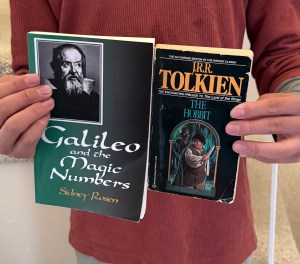
I ended up reading all three of these aloud. M was really engaged in the Galileo readings and chose it as one of his favorites books of the year. We read Archimedes in Morning School with Em. We only did a couple of the demonstrations I had planned (see Other Guides), but both boys were engaged with the story and the physics.
Math
Last year we switched to Math U See after M was diagnosed with dyscalculia. The use of manipulatives, slower pace through topics, and repitition have been good for him. We’re starting to see some progress so we’ll stick with it. We probably won’t finish the Delta pack this year, so we’ll finish that next year and then move to the next level.
Math in Review
We spent the first two terms slowly working through the fractions book in Math U See. I knew that with M’s dyscalculia I would be going slow; I just figured we’d make our way through the normal math lessons at a slower pace. But I realized this year that M needs to focus on math he’ll need in life, not getting frustrated with more complex math. I’ve seen this year as we only covered a third of the book, that though M will finally be able to memorize a process, he never understands it. And if I ask him to do something he learned a week or two ago, he can’t remember it.
So, I have decided to use a Functional Math & Life Sklls approach to his Special Ed Math. He knows how to add, subtract, multiply, and divide. Now I just need to focus on how to use those tools in everyday life. I’ll be spending time on telling time and time problems (how much time do we have left, etc.), money, paying bills, and basic geometry and fractions. And using all these in “word problems.” I taught him how to use a calculator and spent the last term beginning this approach. It might just take until he graduates to get these concepts ingrained enough that he’ll remember how and when to use them.
Artist
This year we will be using the Albrecht Durer study from A Humble Place for Term 1. For Term 2 we will do a study of Augusta Savage using the resources from Heritage Mom. I am considering doing the Gainsborough study from Simply Charlotte Mason for Term 3 since the Huntington Library has many Gainsboroughs for us to see in person, but I haven’t committed yet.
Art in Review
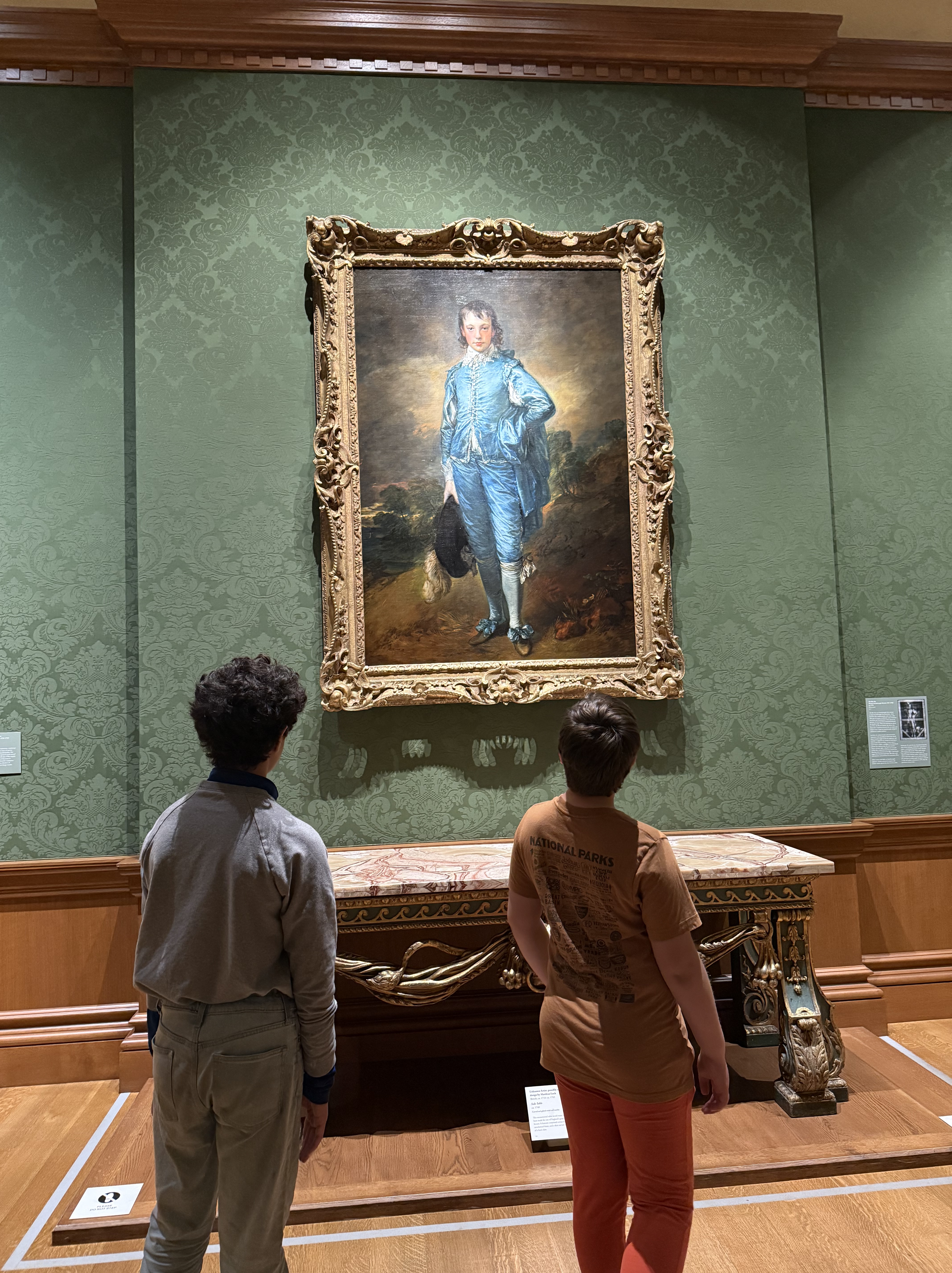
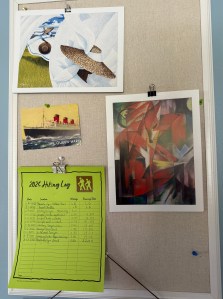
For Artist Study, we did Dürer and Savage as planned. In Term 3 I did end up doing the Simply Charlotte Mason Gainsborough study. We have visited The Huntington many times, but it was fun to see how the boys interacted with the Gainsborough and Reynolds portraits this time after the study. Every week after looking at the prints, I hang them on the bullitin boards above the boys desk so they can look at them. That way we always have the two most recent prints hanging in the schoolroom.
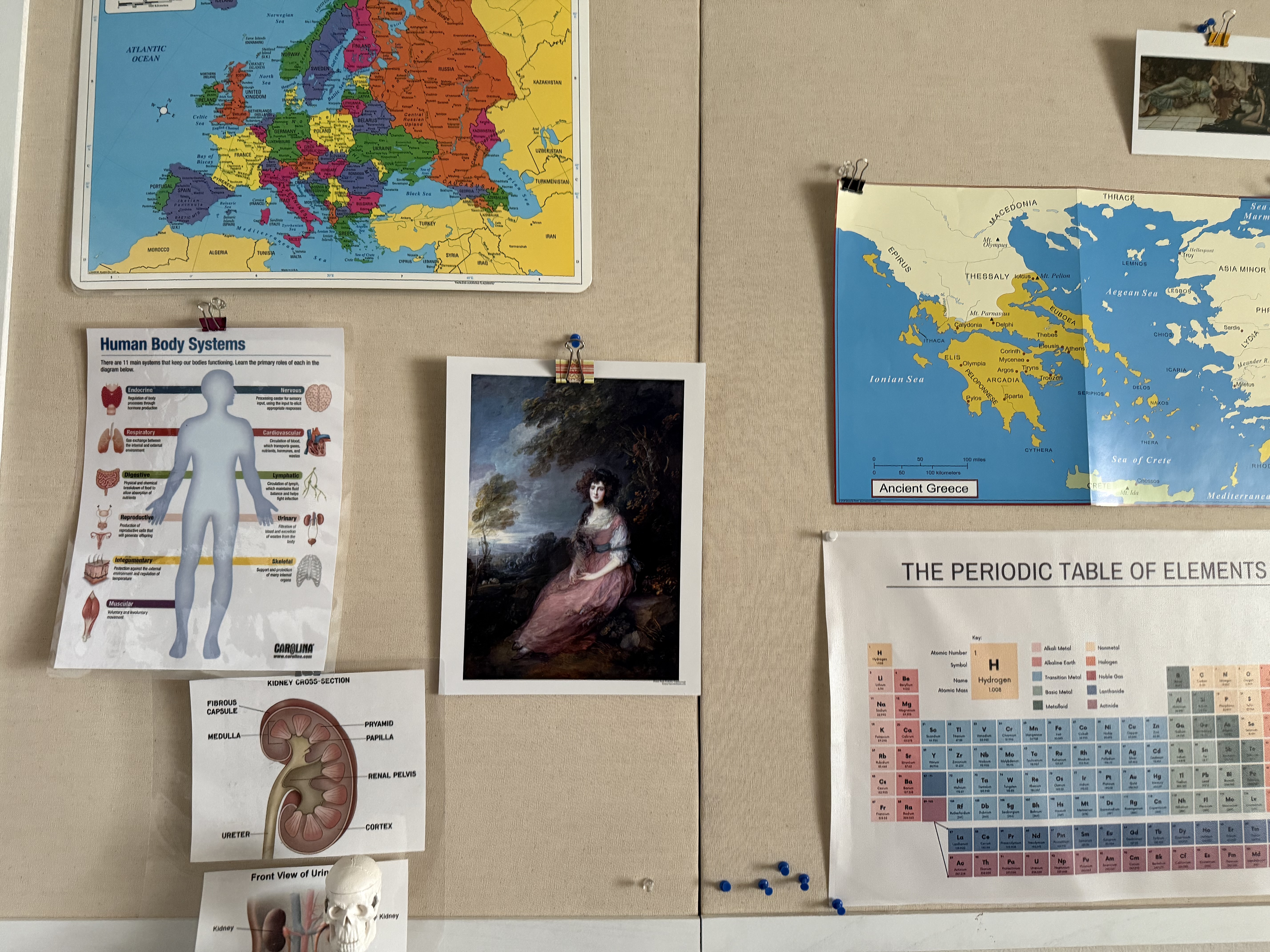
This year I also added in the Lumen study from Goldberry Press . We all enjoyed the Lumen study of Lines in art throughout history. The concepts of line stuck with the boys and they enjoyed pointing them out in subsequent prints. The prints were lovely and the art that was chosen to illustrate the concepts was moving. I now have new favorites that I hope to see in person some day. After studying the prints, I hung them on the bullitin board in the family room so we could see it all week.
I also added in an architecture study using Cathedral by David Macaulay. We went through this slowly over the entire year, reading two or three pages at a time. See the Other Guides Architecture page for details on how we did this study.
I managed this in the Morning Time schedule by having a 10 minute slot three days a week for Picture Study, Lumen, or Architecture. And since none of these take a full 36 weeks to complete, there was flexibility for weeks when there was more in the schedule such as a science demonstration or a longer nature study object lesson or a field trip day.
Music
Composer
When I first started doing composer study, I was not following along with the AO schedule – I found it intimidating. So we read through Opal Wheeler’s Beethoven and Vivaldi: First Discovery Music and The Story of the Orchestra: The Four Seasons in a Day. I realize now that following along with the You Tube videos on the AO page is actually much more simple! I have also been extremely thankful for the guides Christie Russell is posting on the AO Facebook page that give more information about each peice (5 stars, hightly recommend!). Since we’ve already studied two of the artists on the AO schedule, this year I have planned Wagner for Term 1, Joplin for Term 2 (using the resources from Heritage Mom) and Term 3 we’ll do Chopin along with AO.
Composer in Review
After I wrote up the plans for composer study last year, I started looking for which resources to use for the three composers. Wagner was scheduled for Term 1, so I started there. And never left. After looking at the different options for listeneing to Wagner’s music and reading about him, I came across Benjamin’s Ring: The Story of Richard Wagner’s The Ring of the Nibelung for Young Readers by Roz Goldfarb. And after finding subtitled performances of the 15-hour opera on YouTube, I decided to spend the entire year on Wagner. I wrote up a schedule with what to read and which minutes of the videos to watch for a 120-day study. Since the boys enjoyed the term on opera the previous year, I hoped that they would like this. And it ended up being their favorite part of the school day. You can find my study guide on the Other Guides page.
Hymns & Folksongs
We will continue learning new hymns and folksongs along with the AO rotation and use Hannah’s lovely YouTube postings at folksandhymns. I support her on Patreon and receive a monthly email with an mp3 of the music and a pdf of the lyrics. It makes my life so much easier! And with the mp3 I can create a playlist for hymns and one for folksongs on my phone so we can listen to all our AO songs.
The monthly hymn is added to our family hymnal that is used during our Vespers time in the evenings (See Liturgical Year for how we have family readings and singing each evening). The folk song is learned during Together Time in the morning. We rotate the folksong with a hymn from Heritage Mom’s Collection of Multicultural Hymns. She provides links to different versions of the same hymn and we work our way through each version. Then we pick our favorite one to sing along with and add it to our Vespers Hymnal.
 Ambling Together