
Back to Main Planning and Scheduling Page
2026-2027 School Year – Planning for Special Ed Student
M will be in Year 8 and Em will be in Year 5. This is my first time through Year 8.
The planning for this year has been tricky. We moved from California to Maryland at the end of January, lived in temporary housing for two months and then moved into a new home in April. All the packing, house hunting, unpacking, and settling into a new house has put me behind schedule. I usually finish planning for the next year in the Spring of the previous year. This year I am finally done in July!
Overview
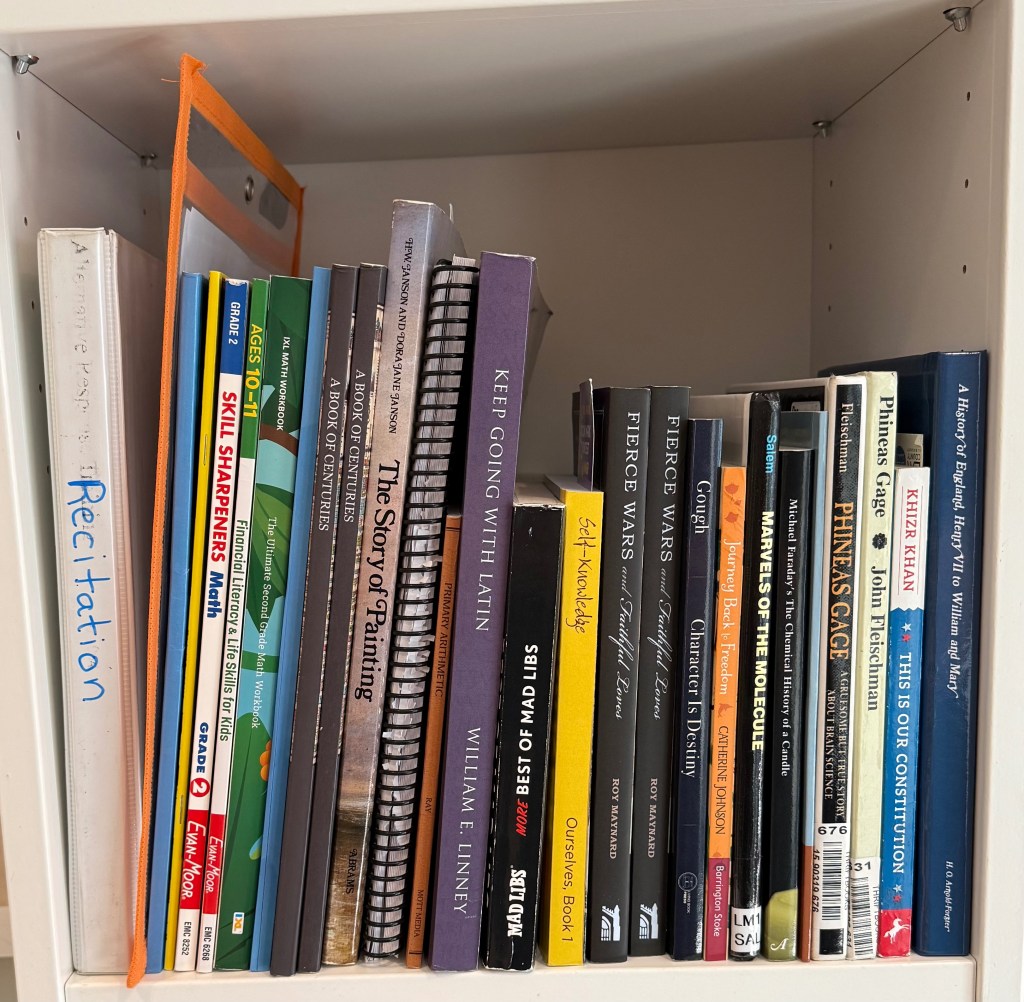
As M progresses through the years, we are both figuring out how to accomodate his special needs. I have attempted most book recommendations in the AO curriculum so far, but have found that if the story is too complicated, the vocabulary too advanced, or if there is not much of a story then M cannot follow it. Difficulty in paying attention is a known characteristic of autism. We have found that especially if a subject does not catch his interest his brain will not let it in. It is an extreme example of what Charlotte Mason describes in her metaphor of a feast. Not everything we lay out will appeal to every child and some students will make connections with different material than others. M is just much more selective in what he even chooses to “taste.” When choosing what to put in M’s schedule, I have started to be able to figure out what will just make him frustrated and closed off and what will be able to engage him. And the tricky one – what will be able to engage him with more help from me. If there is a word or phrase or figure of speech he does not understand, M will focus on that and not be able to move on until he understands it. Sometimes he is interested enough to ask for help. And other times, especially if we’re having to stop often for explanations, he will just tune out. So I have to watch for signs of him tuning out. For example, when we read Beowulf or Shakespeare, he follows along with minimal stops because he loved the story he had previously read in a retelling. But for other books if there is not a story that has caught his attention, he won’t try.
Last year we ended up cutting out a lot of books after starting them. This year I have done a lot of pre-reading to figure out which books might catch his interest, which books we can take in small bites to get through at a slower pace, and which books I can tell without trying that he will not follow. I am going to attempt some that I have a feeling he might not be able to follow (Fierce Wars and Faithful Loves, I’m looking at you), but I’ve also cut a lot and substitued a lot.
I have also changed the way I schedule M’s readings. AO spreads a reading over a term or the entire year, sometimes only reading from the book every couple of weeks. M has a lot of trouble connecting readings when they are spaced so far apart. He also does not do well when one reading covers many topics such as a history reading that tells three or four events that happened in one reading. So I change the schedule in two ways – I condense the readings instead of spreading them out, and I make the readings shorter. For the books that are read only every two or three weeks, I tend to do weekly readings. And for some that AO schedules for once a week, we read shorter bits every day or multiple times a week. M is able to follow along better. This means we often finish books faster than AO assigns them, but then we are not reading as many at a time, so I can fill in the later weeks with the readings I didn’t schedule at the beginning.
One other thing we’ve really learned is M’s need to be able to finish what he’s doing before moving on. This includes whatever he’s doing on a break. If I make him stop drawing to come to school to stay on schedule, he will not be able to focus on anything (even something he usually likes) because all he is thinking about is finishing his drawing. This does have its advantages though. M knows that after he has finished school, he’ll have uninterruped time to himself. So he’ll often get up early to complete all of his independent work so he’ll be done with school earlier in the day. There have even been times when he as ordered something online and knows it’s coming on a certain day so he’ll do as much of his independent work before that day so he’ll get more time with what he ordered the day it comes!
The following plan is based on the Year 8 Lite schedule with major modifications.
Weekly Schedule
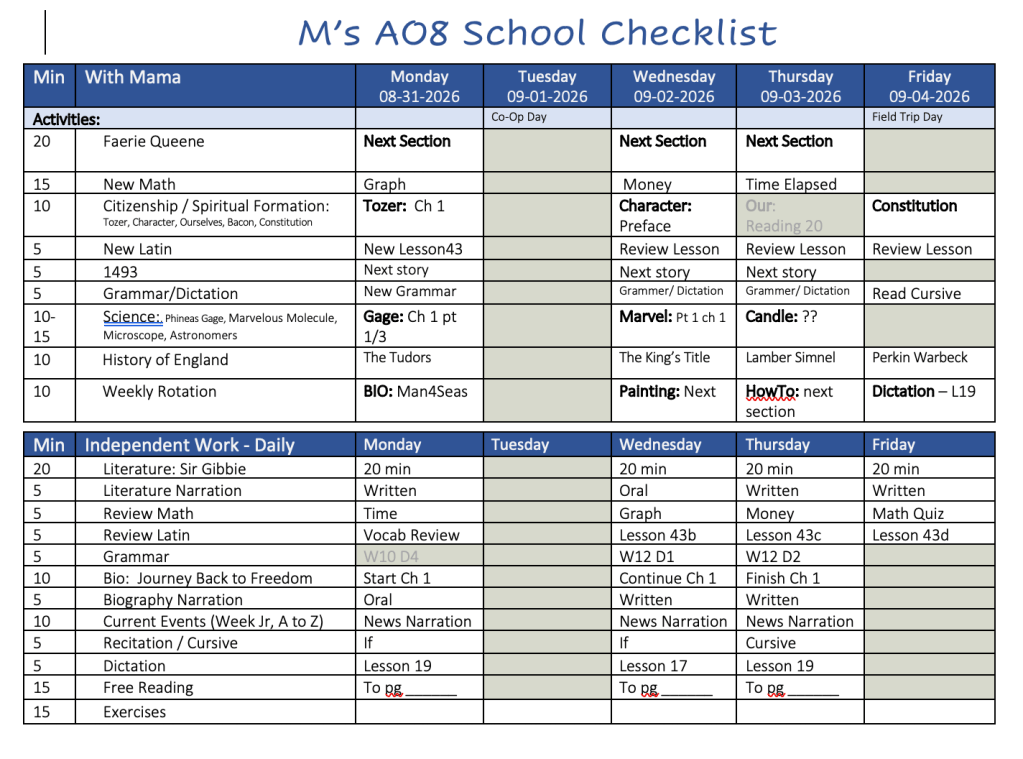
Once I have the 36-week schedule figured out, I spend some time making sure I can fit everything into the weeks allotted. I determine which items will be done together in morning school, which will be independent work, and which ones I will do alongside Em. This means taking the weekly schedule template from the previous year and tweaking it until I can see where everything will go. This process is a bit tricky because I need to remember to think about what is coming in term 2 and 3 and figure out which new things for the term is replacing what from the old term. This year I have added in a new complication: We joined a homeschool co-op that meets on Tuesday mornings for lessons and then optional Fridays for nature walks for field trips. I have decided to schedule only Signs and Seasons for Tuesday afternoons and then at least twice a month use Fridays for a local DC field trip and the other Fridays with our co-op. I have scheduled in a little work for before or after the Friday outing. Here is the template I have set up for M’s Year 8:
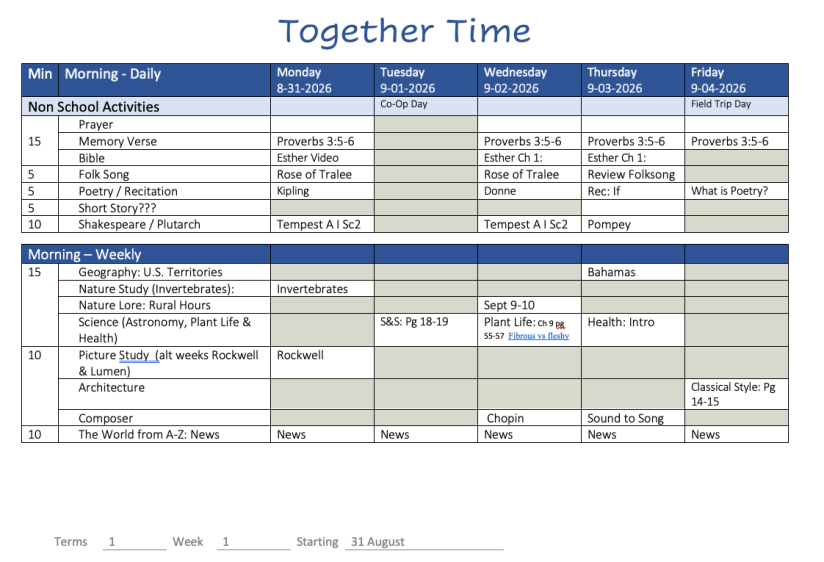
In addition to the weekly schedules for each student, I also make a Morning School weekly schedule. I have to do this to keep track of all the things I have planned for us to do together. Here is the template I’ll be using for this year:
Bible
ible is split up into Together Time and Vespers and then by the time of the year. This year we will cover the following:
| Together Time | Vespers (see Liturgical Year for details) | |
| Aug – NovOrdinary Time | Esther, Job | I & II Samuel |
| Advent | Hallelujah by Cindy Rollins | Advent Readings |
| Christmas | N/A (no school) | Christmas Readings |
| Jan/Feb | Special Study: Jonah | Luke |
| Lent | The Sacred Sacrifice by Hannah Paris | Lent Readings |
| Easter | TBD | Acts |
| Jun – Aug Orinary Time | n/a (no school) | Possibly the narrative portions of Isaiah and Jeremiah |
Check Out the Other Guides pages for Bible Reading schedules. I have made up bookmarks with reading schedules for the AO6 readings (Job, Jonah, Daniel, Ezra, Nehemiah, Esther), which we’ll be using to finish out the books we didn’t get to last year.
For Bible Memory, we work through one or two passages a term in Together Time. I will use the suggestions from AO for Bible recitation for AO5 and AO8.
In addition to the Bible reading I will read the following aloud to M:
- Saints and Heroes: We’ll pick up where the AO schedule starts for Year 8 even though we did not finish the assigned readings for Year 7. To make this fit into a weekly schedule, I will put these readings in the slot for Fierce Wars once I have finished it.
- Knowledge of the Holy by A.W. Tozer: I’m replacing all the other Spiritual Formation books with this one. We’ll work through it slowly thoughout the year, reading it one or two times per week.
History
AO Year 8-Lite History Booklist Here
Since using the Arnold-Forster book last year worked well, we are continuing with it. I have it scheduled for one story per day as we did last year. I read these aloud to M. This does not keep up with the AO schedule, though last year we ended up finishing the book on time. I think some weeks the assigned chapter was shorter, so we caught up in the end. If we don’t finish on time, we’ll pick up where we left off the next year. We will also continue doing his drawing narrations for each major figure in the book. This helps him be able to review and remember who the different people were (see Year 7 In Review for details on this).
The AO Year 8 Lite schedule only includes two short speeches, so I have scheduled those in as assigned. I will be reading them with M in place of one or two of the Arnold readings the week they are assigned. I downloaded a document from the forum that has the speeches for Year 8. This link to the forum has a list of the Year 8 documents. I have skimmed the Pilgrim Journal and decided to skip that one with M.
We will also continue filling in the Book of Centuries. M does not really like doing it, so he doesn’t ever suggest to do this. I have to remind him of important events that might be a good idea to add.
Biography
AO Year8-Lite Biography Booklist Here
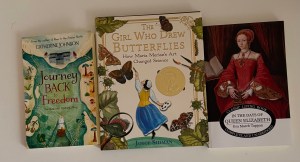
Each term I have assigned M a biography to read on his own. He tends to do well reading biographies independently. I have assigned the following for him to read and do a written narration on multiple times per week:
- Term 1: Journey Back to Freedom: The Olaudah Equiano Story by Catherine Johnson
- Term 2: In the Days of Queen Elizabeth by Eva March Tappan
- Term 3: The Girl who Drew Butterflies: How Maria Merian’s Art Changed Science by Joyce Sidman
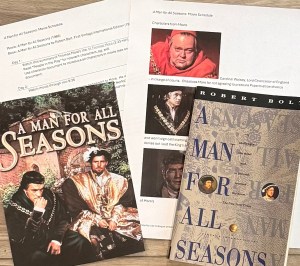
In Term 1 I have assigned us A Man for All Seasons. I have read through the play and don’t think that M will follow it very easily. So I have decided to use the 1966 movie. I have watched the movie and split it into 12 viewings that are about 10 minutes each, plus an introductory day. I will schedule them once a week, except two in the first week. See my viewing schedule on the Other Guides page.
Geography
AO Year 8-Lite Geography Booklist Here
The only book we are going to do from the AO list is 1493 for Young People: From Columbus’s Voyage to Globalization by Charles C. Mann. I have scheduled for all year, reading three times a week. I am in the process of pre-reading to find good stopping points and resources to help M engage. See the Other Guides 1493 page for the resources I’ll be using.
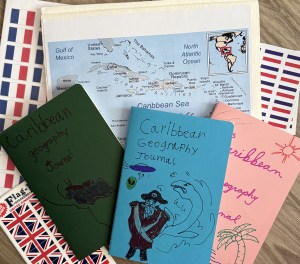
Our morning time georaphy/map drills time will be studying the Carribean this year. As with previous geography studies, we find the country on the globe, look at maps, answer map questions, and learn a little about its culture and natural enviroment through books or videos. This is usually about a 15-20 mintues time once per week. We will be spending all year in the Caribbean, but the study guide can be compressed into 2 terms. See Other Guides page for the guide.
Nature Study
As usual, we’ll do Nature Study in Morning Time one time a week for about 20 minutes. This year we will follow the topics in the AO schedule. We will incorporate the topic into field trips and nature walks. I’ll post my nature study guides on the Nature Study Page as I complete them.
Science
AO Year 8-Lite Science Booklist Here
About half of M’s science will be done together in morning school. This includes: Rural Hours, Signs & Seasons, First Studies of Plant Life, Nature Study, and Health.
We will follow the AO schedule for Rural Hours, reading the assigned dates once per week. While I was pre-reading, I realized I did not recognize most of the flora and fauna mentioned in the book. So I found examples of the main ones listed each day and posted them on the Other Guides/Rural Hours page.
We will pick up where we had to leave off with Signs and Seasons last year when we moved. We’ll start about page 18 and go through about page 53. I have put this in the schedule for the day we spend the morning with our homeschool co-op. A lot of the book is activities that we’ll need to be outside for. In fact, some are night time star observations that will need to be worked into our family evenings. Over the summer the boys and I made stepping stones so we can create a compass in our back yard. I used these instructions to make them.
PHOTO COMING SOON
Plant Life will also pick up where we left off for the move last year. We’ll go through lesson 9 through 18. I have it scheduled for once a week. Some weeks we will do a reading from the book and some weeks we’ll do the recommended demostration. I have the readings and experiments added in to my AO 36-week schedule.
Our new state of Maryland requires Health to be taught every year. So we will read Eat Well and Feel Great: The Teenager’s Guide to Nutrition and Health by Tina Lond-Caulk. Once a week I will read and discuss one section (basically however far we get in the alloted time).
For science with just M, I will work through Marvels of the Molecule by Lionel Salem, Michael Faraday’s The Chemical History of a Candle by Bill Hammack and Don DeCoste, Biology/Microscope lessons, Phineas Gage: A Gruesome But True Story About Brain Science by John Fleischman, The Great Astonomers by Robert Ball, and William Harvey and the Circulation of the Blood by Thomas Huxley.
I have one day a week planned for reading Marvels to M. They are very short chapters, but I am not sure how much he will be able to follow as the book gets more complicated. I hope we can push through and he can take away a basic understanding by the end. I will use this Molecule Molecule Set when possible to help him.
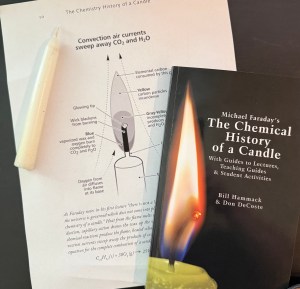
I read through Chemical History and realized that M would probably not be able to follow it. But that he would enjoy learning some of the concepts. So, I used the teacher’s guide and videos and came up with an alternate 14-week schedule for readings, demonstrations, and videos. I have posted it in Other Guides. I have it scheduled to alternate with our microscope lessons.
Phineas Gage will be as recommended by the AO schedule. I have purchased two copies of the book so that M can follow along as I read.
I have chosen to read Brahe and Flamstead from Great Astronomers. We did not get to Brahe last year. And we have read about the others on the AO schedule in other contexts. So, to fit everything in for M without overwhelming him, I have these two scheduled in weeks 25-27 and 30-32.
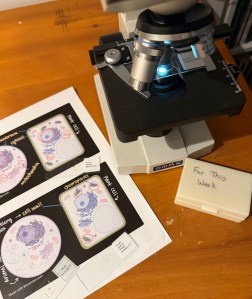
AO recommends doing four microscope activities each term. This means 12 per year. I have scheduled these so they alternate with Chemical History of a Candle in Term 1 and 2 and alternating with Great Astronomers and Cirulation of Blood in Term 3. We will only get in 11, but I’m calling that good. Last year we tried working with Adventure in Microscope but I was frustrated that I could not tell what we were looking at. This year I have taken a slightly different approach. I’ve done a little research and purchased slides (large set and fiber set) and came up with a schedule that I have posted in Other Guides.
I purchased the hardcopy pamphlet of William Harvey and the Circulation of the Blood because it is just easier for me to mark up what I am actually going to read to M if I have a hardcopy. It is also available on kindle for free as well as from the free links on the AO website. Note that neither the hardcopy nor any digital versions have the figures included nor page numbers. The AO website includes links to the figures as well as updated version. I have decided to spend week 21-22 on this topic as follows:
- Week 21: Read pg 1-5 (beginning to “…much matter for porfitable reflection.”)
- Week 22: watch Ceaseless motion: William Harvey’s experiments in circulation (6:07 min)
- Week 23: Read pg 22-24 (“Thus Harvey’s contributions to…” to “…granted to very few men”)
Language Arts
Literature
AO Year 8-Lite Literature Booklist Here
M will not be reading any of the literature options listed for Year 8. Last year we tried History of English Literature, and as much as I loved it, M struggled to the point of frustration. So we dropped it. I reacently read I Promessi Sposi and loved it, but know that M is not ready for it. I have flipped through the other books on the list and decided that none of them will engage M. He loves stories and he loves reading and has engaged with many of the readings in previous years. So I don’t want him to get discouraged and no longer enjoy the literature part of school. I know I need to challenge him, but there is a level at which it is beyond his ability. I’ve looked back at the free read options he hasn’t read and decided to have him read the following indpendently:
- Term 1: Sir Gibbie by George MacDonald – a modernized translation. He’ll read for 20 minutes every day.
- Term 2: The White Company by Sir Arthur Conan Doyle. I’ll have him follow along with an audio book for 20 minutes a day.
- Term 3: Stories of Don Quixote Written Anew for Children by James Baldwin. This one won’t take him as long to get through, but I’ll stick with our 20 minutes each day for consistency in the schedule. If he finished early, he’ll get extra free time.
Shakespeare

For the last two years I have scheduled the Term 1 play to be a play that we watched over the summer. Both years we’ve been able to see a Shakespere in the Park production with friends. Before the performance, we have read a retelling with our friend – narrating with peg people or puppets. Then when we read the full play in the fall, the boys have been fully absorbed. For Love’s Labour’s Lost last year, they also watched Kenneth Branaugh’s incredibly silly version after reading it. In fact, I was only showing them a clip but they begged to watch the full movie in their free time! This summer, we are able to visit California and will be able to see Comedy of Errors performed by the Indpendent Shakespeare Co. with our friends. Before we see the play, we will read the Lamb’s version and then we’ll read a scene or part of a scene twice a week in morning school.
I am planning The Tempest for Term 2 and The Winter’s Tale for Term 3. As usual, when we read along with the script, we will listen to the Argo Classics audio version. In the past, reading it about 3 times per week got us through a play per term (except the term we moved across country – it took us longer so we only did two plays that year).
Poetry
AO Year 8-Lite Poetry List Here
We do poetry in Morning School together, blending both M and Em’s assigned poets. Poetry is scheduled for three times a week. Morning school poetry for Term 1 will be Kipling from Year 5 and we’ll take Donne’s Sonnets from Year 8. In term 2, we’ll read Longfellow and Shakespeare’s Sonnets. For the Sonnets, I’ve choosen 12 sonnets from the AO list and we will listen to the recordings Patrick Stewart did of all the sonnets during the COVID lockdown. In Term 3 we study Gwendolyn Brooks using the resources suggested on the Heritage Mom website.
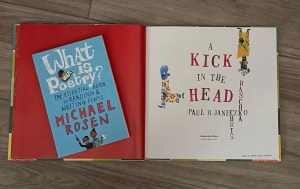
For the third day of poetry in the week, we will work our way through some general poetry books. We’ll start with A Kick in the Head by Paul Paul B. Janeczko and Chris Raschka and then move on to What is Poetry? The Essential Guide to Reading and Writing Poems by Michael Rosen. This is in place of the Suzanne Clark book, which is not suitable for M, at least yet. I am hoping that when Em is in Year 8 we can go through it in morning school all together.
See my Other Guides/Poetry resources for how I schedule the poems and the resources I use (this page is in progress and does not have all of the poets we’ve read yet)
I will also be attempting to read Fierce Wars and Faithful Loves Edited by Roy Maynard. I saw a suggestion on A Humble Place blog to get two copies of the book for the more complicated readings. We did this for Beowulf last year and it worked out really well. So I have two copies of this book. I have also found this resource that summarizes short sectons at a time. You can pay to get more access, but it looks like I’ll be able to get enough on their free site to help us along. I am thinking I will read the summary for each section before reading the poem. M has read a retelling of the Fairie Queen or “stories from” several years ago, so he is a little familiar with the stories. I am hoping with having read the stories and reading the summaries, we’ll be able to get through. I am scheduling this for me to read to him while he follows along every day.
Recitation
AO Year 8-Lite Recitation Suggestions
Since we do poetry, Bible, and Shakespeare together, we also work on recitation together. We review it once a week in Morning School. Then both boys study the passage twice a week during their independent time. I have created a document with the poems and passages I have chosen from our poets and Shakespeare readings. This way when they have mastered one passage, I just print the next for the recitation binders. We keep one binder in the Morning School basket and each boy has their own. I keep all the recitations they have done in the binder as a reminder, but also as a way to easily access the recitation component of the Exams.
Copywork / Dictation / Grammar
AO Year 8-Lite Copywork and Grammar/Composition
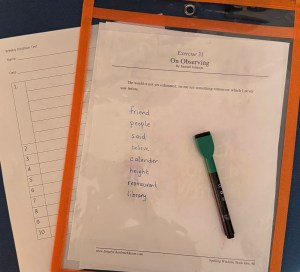
M will continue to use Spelling Wisdom for his dictation. Every week I print the next lesson from the pdf version I have. At the bottom of the page I include a list of words that I’ve noticed he’s been having trouble spelling. I put it in a dry erase pocket so he can use a white board marker on it for practice during the week. He studies the quote and the list of words during the week on his own. It’s been working that I ask him every day how it’s going and if he thinks he needs extra practice with me. Sometimes he chooses extra practice time but sometimes he doesn’t. On Friday we do the official dictation exercise using this form. I used to do this on a white board so he could easily erase it. But since moving to Maryland, we have to report to the local school district showing regular work at the end of each semester. So I have started using this for the Friday work but let him use the white board for our mid-week reviews.
M is having trouble remembering cursive and being able to read it. My goal is not to make him write in cursive all the time – this is too painful for him. But I hope that he’ll at least be able to read it. Once a week he will copy the passage and the next day I will review it and have him read aloud the cursive passage at the bottom of the page. I have created 3 documents with twelve weeks of exercises. In the first I use the cursive font. In the second two I will find passages each week and write them in cursive. I want him to have practice reading both font and actual writing since he has a hard time if there is a little difference between the scripts. The documents are available here:
M also gets copywork practice in his grammar lessons. He is in the second book of Fix It Grammar. At the beginning of one week, I go over the new concept for the new “week.” Then he does Day 1 and 2 that week and Day 3 and 4 the next week. So he gets two to three days of grammar a week. M has difficulty understanding and then remembering the abstract concepts of grammar. Most days he will do half of the lesson and then when I go over it with him after his independent work time, we finish the rest of it together.
Foreign Language
He is still working his way through Keeping Going with Latin. He does about one lesson a week. I am learning Latin along with him. I have not yet added in a second language for M because I will have to learn it along side of him or enroll him in some sort of class where he can ask questions and get practice. I have not had the time to do it with him yet nor have I found a class for him. I am hoping when Em gets to Year 6 or 7 we will be able to find a program or curriculum were we can all learn a modern language together.
Citizenship / Government / Logic
AO Year 8-Lite Citizenship, Government & Economics, and Logic Booklists
I will continue reading Ourselves to M, one reading every other week. We are working our way through this Annotated Youth Edition that has the readings marked and numbered. I am using the reading breaks in the book instead of following exactly the AO schedule. M is able to understand a lot of what we are reading, but some of it is too abstract for him.
Alternating weeks with Ourselves, AO has the Bacon essays scheduled. I am going to attempt to read these to M and see how he responds. I am using the printable version from this link in the forum for the essays.
I have read the first couple of sections in the Russel Gough book and decided to try this one with M. Since he is doing ok with Ourselves, I think this will be on the same level and hope we can have some good conversations from it. I will be reading it to M hoping to follow the AO schedule.
We did not finish the Maynard book from Year 7. Though I found the first quarter or so of the book helpful in explaining basic economic principles, I did not agree with the strong bias of the later chapters. I did a minor in Economics in undergrad and recognized that the book had a very strong but subtle viewpoint that I do not want to perpetuate. It was not presented as one of multiple options, but stated as fact. Therefore, I do not trust Maynard to be unbiased in the book for Year 8. Instead, I have decided to read through This is Our Constitution: What It Is and Why It Matters by Khizr Khan. We will read one section every week throughout the year.
I am not sure how M will respond to How to Read a Book, but I am going to start reading it to him and see how he responds. The assignment starts in Term 3 and includes large sections of the book every other week. I am going to read the smaller “sub-chapter” sections to M every week starting in Term 1 and anticipate we’ll end about where the AO schedule does by the end of the three years this book is on the schedule.
I have decided not to attemp Utopia with M, though I am looking forward to getting into it with Em.
I am going to bring back Plutarch, now that Em is ready to start it. I believe Em’s narration and discussion will help M follow and process the readings better than he was when I was reading it to just him. We will read Plutarch once a week during morning time. I have purchased Anne White’s Plutarch Project Vol 7 and have planned to make it only through Pompey by the end of the year. If we end up going faster, I’ll start the other person in the book, Themistocles.
For Current Events, we will continue to subscribe to The Week Jr and watch The World from A to Z every morning. M narrates a current event 3 to 4 times per week. I have him using this form so that I can submit his narrations more easily to the county as part of our social science requirement.
Math
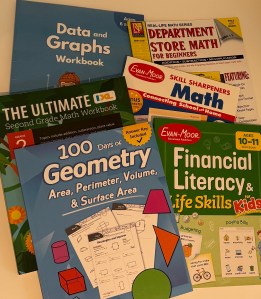
Since we switched over to focusing on Funtional Math skills for M to accomodate his dyscalculia, math time has been so much less frustrating and contentious. M is actually making progress. For example, in the workbooks for money, when they asked how much more does one thing cost than the other or what it would cost to buy these three items, M was at first not able to figure out which operation to use. But by the end of the year, M could accurately decide if he was adding or subtracting and use his calculator to find the correct answer.
This year we will finish up the several books in the Real Life Math Series as well as this graphing workbookthat we started last year. I found this resource on Teachers Pay Teachers that includes a lot of “word problem” practice, so we will be using this as well. I also found this book on financial literacy and life skills that I might use occationally as well. Every day M does his independent work while I am working with Em and then we do our work together. This way I am able to review what he has done that day and help him finish anything he couldn’t do on his own and then go over concepts that he will be working on in the lesson for the next day.
Art and Music
Artist Study
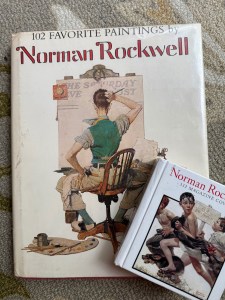
While we mostly follow the AO schedule, I do make some changes to add in some diversity. This year we will study Norman Rockwell in Term 1. I’m sad there will be no prints available from A Humble Place since most of his artwork is not in the public domain. But I do have a book of his artwork from my grandparents that I remember pouring over for hours as a kid. I also hope to be able to see at least one of his pieces at the Smithsonian American Art Museum. I also have a secret plan to take a family weekend up to see the fall colors and the Norman Rockwell Museum (it may be fantasy, but a girl can dream). I have posted my plan for the term in Other Guides.
In Term 2, we will study Joshua Johnson using the resources from the Heritage Mom website. Now that we are living near DC, we will be able to see several of his works at the National Gallery of Art. In Term 3 we will study Pieter Bruegel the Elder. I chose him because we missed him when he was on the AO schedule and I think the boys will both connect with his art. We will also be able to see several of his pieces at the National Gallary of Art.
We will also continue to work through our Lumen studies on the weeks we are not doing one of the six prints from the term’s artist.
I will continue to read The Story of Painting by H.W. Janson and Dora Jane Janson once a week. We are not keeping up with the AO schedule on this book, but since it will take several years I figure we’ll be ok.
Architecture
Lately I have been including an achictecture study in Morning Time on the weeks we don’t do an artist study (see Other Guides/Architecture). We’ve been through Young People’s Story of Architecture, and Catherdral & Mosque by David Macaulay. This coming year I am going to use Architecture Styles Spotter’s Guide. We will slowly work through the book one topic at a time. Each week we will read the next one page description of the an architectural concept.
I will also carry it with us as we go on our adventures in the cities around D.C. Already when we’ve been out the boys have pointed out columns and design features, remembering that we’ve studied them and sometimes even remembering the names. So, I’m going to try out bringing our “field guide” with us just like we do on nature walks so that we can study architecture in the wild. I’ll let you know how it goes!
Composer
This year I have chosen to study Chopin in Term 1, Debussey in Term 2, and Florence Price in Term 3. We have really enjoyed the Music Study wih the Masters series by Simply Charlotte Mason, so will be using those resources for all three of these studies.
We will also continue with our From Sound to Song study from Thistle and Biscuits. We did not make it through the study last year, so will continue where we left off. The boys have been enjoying the videos and interactive websites linked in the study.
Folk Songs & Hymns
As usual, we will continue following along with the AO Hymn and Folksong and use Hannah’s lovely YouTube postings at folksandhymns. I support her on Patreon and receive a monthly email with an mp3 of the music and a pdf of the lyrics. It makes my life so much easier! And with the mp3 I can create a playlist of hymn on my phone so we can listen to all our AO songs.
The monthly hymn is added to our family hymnal that is used during our Vespers time in the evenings (See Liturgical Year for how we have family readings and singing each evening).

